Bambach Size Guide: Classic, Small, or Plus?
Table of contents
Choosing a Bambach starts with two separate decisions: which saddle seat fits your body, and which cylinder puts you at the right working height.
A taller person does not automatically need a Classic Plus. A shorter person does not automatically need a Classic Small. Start with the saddle, then choose the cylinder, then check that the complete setup works at your workstation.
Compare the three Bambach seat sizes
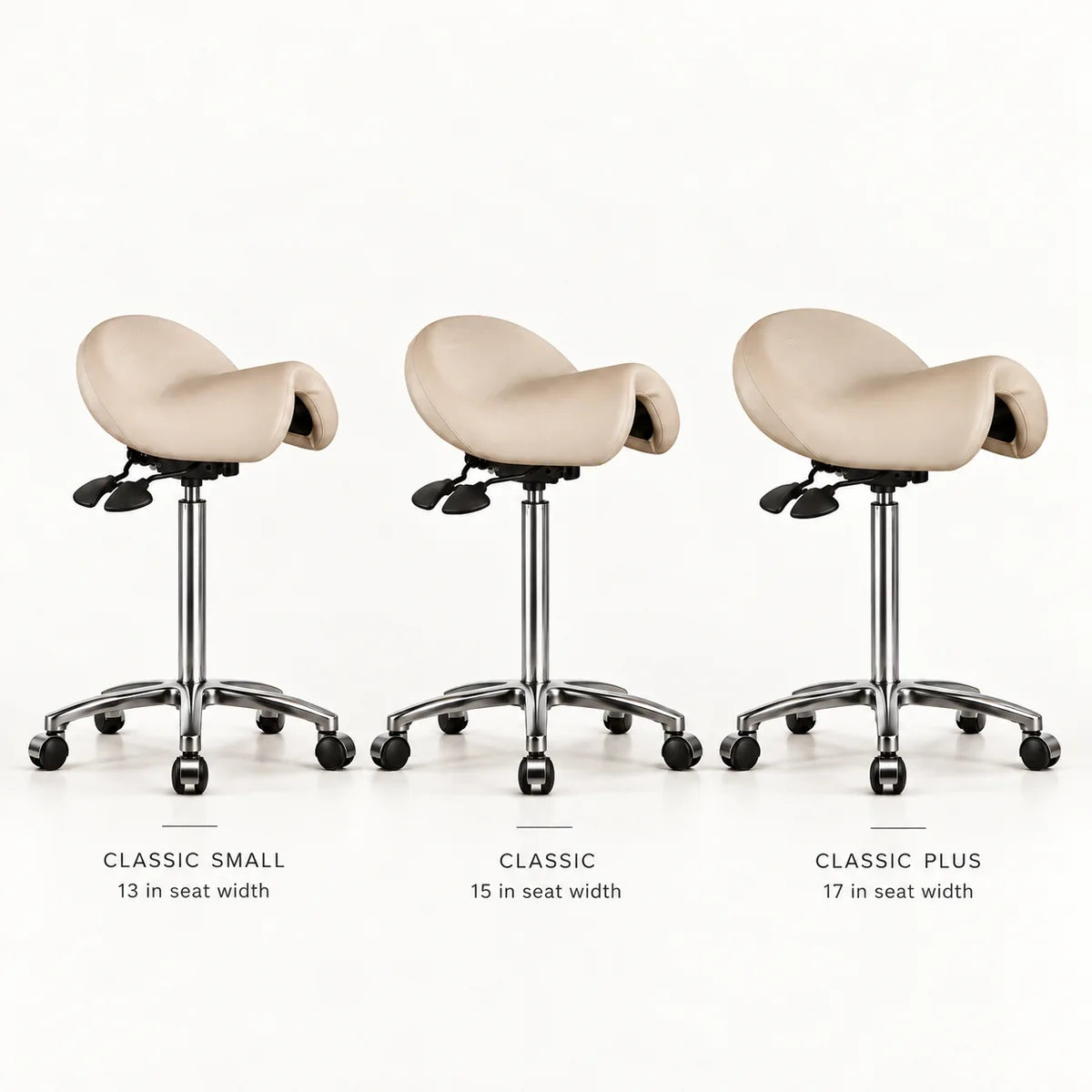
The Hager U.S. range sold here includes Classic Small, Classic, and Classic Plus. Each has a different width and front profile.
| Seat size | Seat width | Horn length | General starting point |
|---|---|---|---|
| Classic Small | 13 in | 7.5 in | Petite adults, including both men and women. Hager specifically lists women up to size 8–10 and children as examples. |
| Classic | 15 in | 8.5 in | Men up to a 36-inch waist and women around sizes 12–16 |
| Classic Plus | 17 in | 7 in | Men with a 38-inch waist or larger and women around size 18 or larger |
These are manufacturer guidelines, not firm cutoffs. Hip width, how your thighs fall around the saddle, and personal comfort matter too.
The Classic is the standard size and a sensible first option if you are not clearly in the smaller or larger range. The Classic Small offers a narrower saddle for a smaller frame. The Classic Plus provides a wider seat, but it is not simply a Classic made wider: its horn is shorter as well. That change in shape can affect how the front of the saddle feels between your legs.
Choose the Plus for its saddle fit, not because you need more chair height. Height is the next decision.
Choose the cylinder for your working height
Once you have a seat size in mind, choose a cylinder that lets you work at a comfortable height. Hager gives these approximate seat-to-floor adjustment ranges:
| Cylinder | Seat-to-floor range | General user-height starting point |
|---|---|---|
| Short | 20–25 in | 5 ft 2 in and under |
| Medium | 24–30 in | 5 ft 3 in to 6 ft |
| Tall | 26–36 in | 6 ft 1 in and over |
The ranges overlap because your height is only a starting point. Your task and work surface can change which cylinder makes sense. Hager identifies the Classic seat with a Medium cylinder as its most commonly purchased combination, but that does not make it the right fit for everyone.
A foot ring is another reason to look beyond the general height brackets. For a higher working position with a foot ring, such as a dental assistant’s or drafting setup, Hager typically recommends a Tall cylinder for most user heights.
Check your workstation before ordering
Measure the height of the surface where you work most often. Then check the lowest obstruction beneath it, such as a drawer, support bar, keyboard tray, mounted equipment, or cabinet.
You need enough clearance to set the chair at a useful working height and position yourself comfortably at that surface. A cylinder that fits your height on paper may be a poor match if the desk forces you to sit much lower than intended. Conversely, a higher treatment or drafting station may call for a taller setup.
Use these examples as starting points
-
5 ft 6 in, average build, standard desk: Start by considering a Classic seat and Medium cylinder. Check desk clearance before deciding.
-
6 ft 2 in, narrow build: A Tall cylinder is the general height starting point, but the Classic may fit your body better than the wider Classic Plus.
-
5 ft 2 in, wider build: A Short cylinder may suit your working height, while your saddle fit may point toward the Classic or Classic Plus rather than the Classic Small.
Each example separates saddle fit from chair height. Neither measurement should automatically determine the other.
Get help when you are between sizes
Clothing size alone cannot settle a close choice between two saddles. If both look possible, consider how much support you want under your hips and whether the front of the saddle allows your legs to rest comfortably around it.
Before ordering, send us your height, waist or pants size, the kind of work you do, and the height of your main work surface. Let us know if you want a backrest or plan to use a foot ring. Those details give us a better basis for narrowing down the configuration than height alone.
Choose the backrest after you have considered your saddle and working height. It can provide something to rest against during quieter parts of the day, while a backless setup may appeal to someone who moves frequently around their work.
Frequently asked questions
What does “horn length” mean on a Bambach saddle?
It measures the front portion of the saddle. The three sizes differ in both width and horn length, so two seats can feel different for reasons beyond how wide they are.
Why do the cylinder height ranges overlap?
The cylinders offer different adjustment ranges, and more than one may reach your preferred seat height. Your workstation, working position, and whether you use a foot ring help determine the better choice.
Does the Classic Plus require a wider chair base?
The Classic Plus has a wider saddle than the Classic. Hager’s measurement guide lists a base diameter of about 22 inches separately from the saddle dimensions. If clearance is tight, confirm the base on the specific configuration you order.
Which cylinder should I consider with a foot ring?
Hager typically recommends a Tall cylinder for most user heights when a foot ring is used at a higher workstation. Check your work-surface height and the position you need before ordering.
What should I measure before asking for sizing help?
Have your height, waist or pants size, and main work-surface height ready. Tell us what kind of work you do and whether you want a backrest or foot ring. We can use those details to help you narrow down the seat and cylinder.
More articles

Why Bambach Saddle Chairs Work So Well for Dentists
October 2, 2026
How to Adjust Your Bambach Saddle Chair
September 29, 2026